In today's automated inspection and machine vision fields, linear scan cameras have gradually become popular products on the market with their unique performance and wide range of application scenarios. Cameras are mainly divided into two types: CCD (charge-coupled device) and CMOS. This article sorts out the basic knowledge of CCD linear scan cameras to help readers better understand and effectively apply this technology.
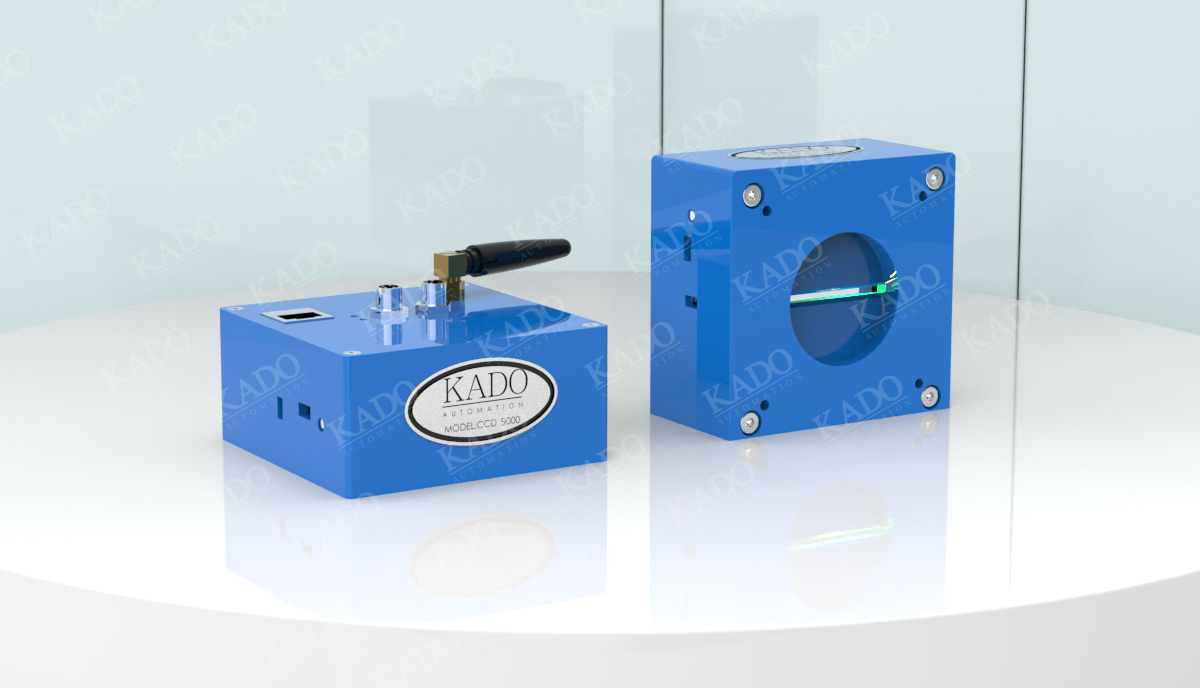
Working principle of line scan camera: Line scan camera (also called linear scan camera) is a device that achieves image acquisition by rapidly moving optical lens or object. Its main principles are as follows:
1) Optical system: Line scan camera contains an optical system for focusing and projecting the image of the object onto the photosensitive element.
2) Photosensitive element: Photosensitive elements (such as CCD or CMOS sensors) are the core of image acquisition. They convert light signals into electrical signals.
3) Scanning mechanism: When the image of the object is projected onto the photosensitive element through the optical system, the photosensitive element scans the image line by line, that is, reads the light signal line by line.
4) Signal processing: The electrical signal read by photosensitive will convert it into a digital image by signal processing.
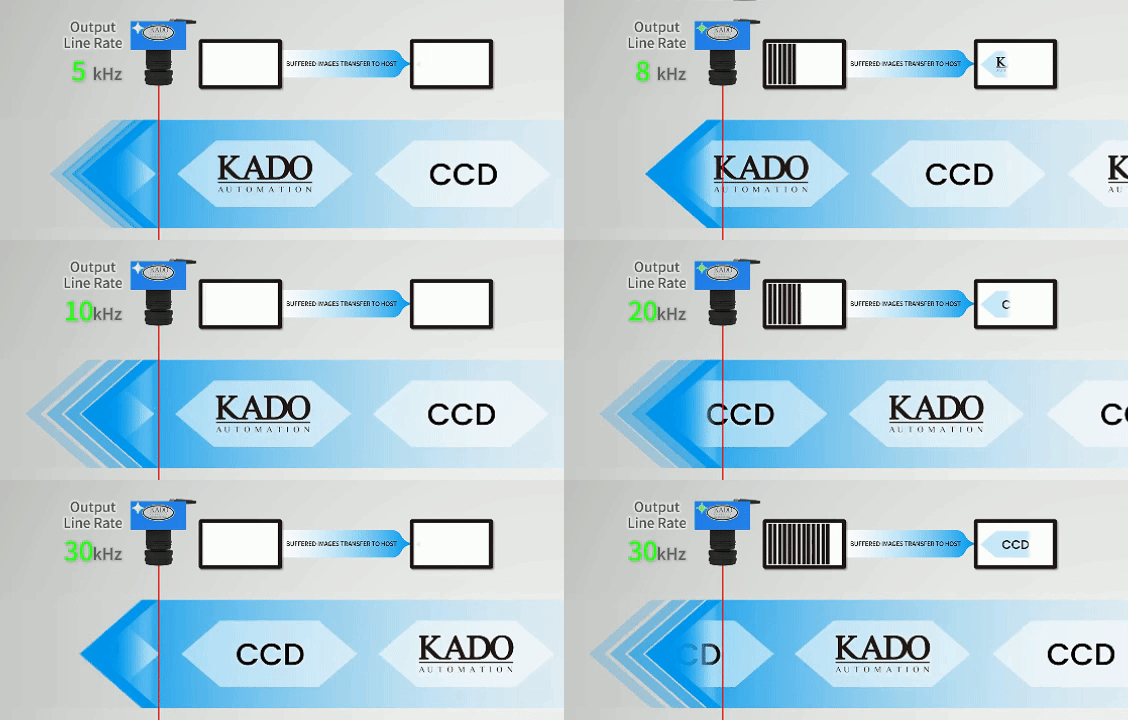
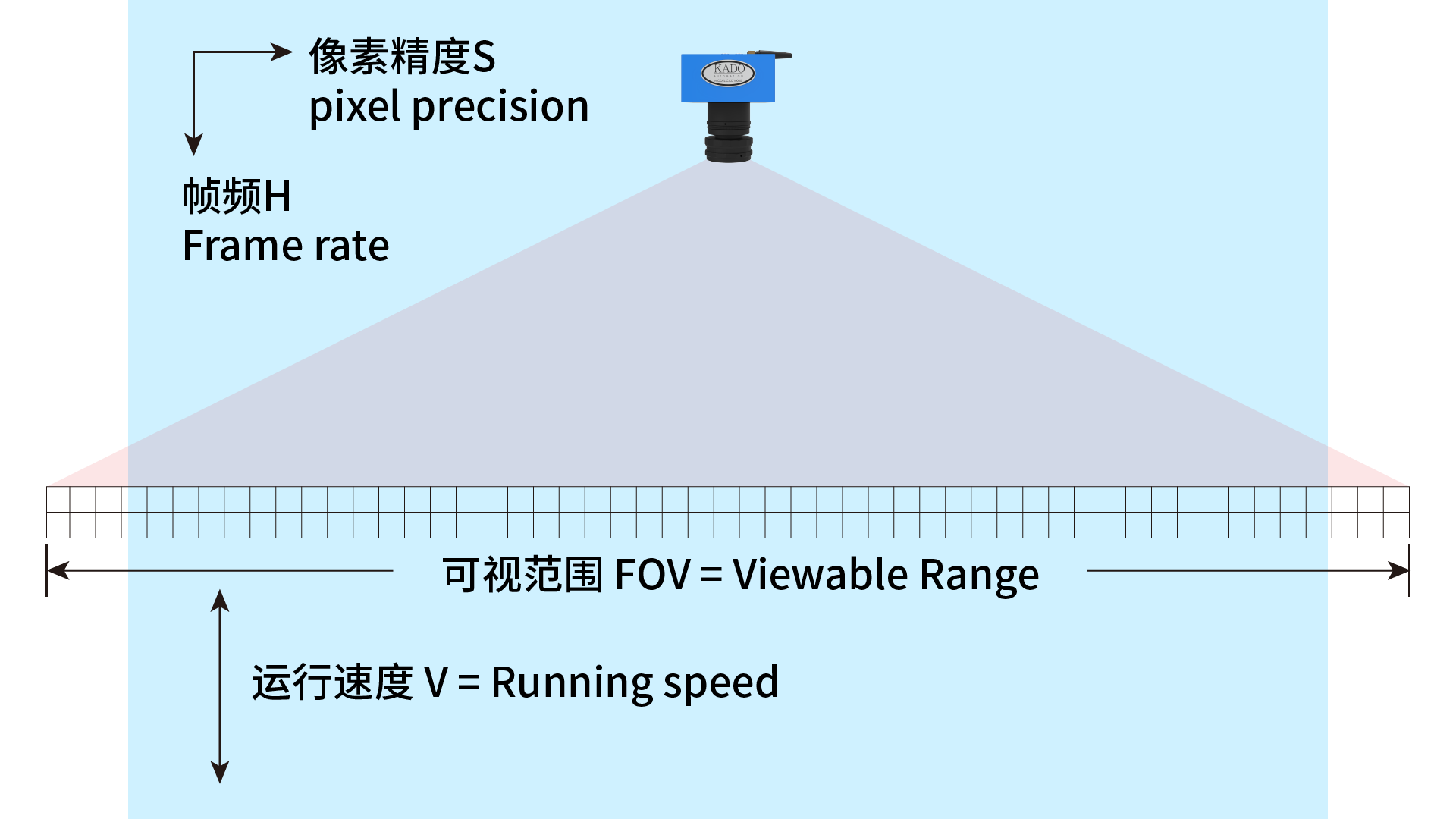
As shown in the figure above, when the material within the camera's field of view is moving, the camera will convert the image signal into digital signals by uploading to form a digital image. Therefore, when the linear scan camera takes a complete image, the object being measured and the camera itself need to be in relative motion state. This motion speed signal can be used as a benchmark for the camera's automatic adjustment of the photo frequency to ensure that the horizontal and vertical proportions of the photo are consistent. The camera shooting mode can also be set to a fixed frequency for shooting, but the vertical proportion (resolution) of the image taken in this way will change when the running speed of the object being measured changes.
How to choose a suitable linear scan camera: When choosing a suitable linear scan camera, you need to consider several key factors. The first step is to clarify the application requirements and specifically define the detection object and its characteristics.
Then evaluate the camera performance:
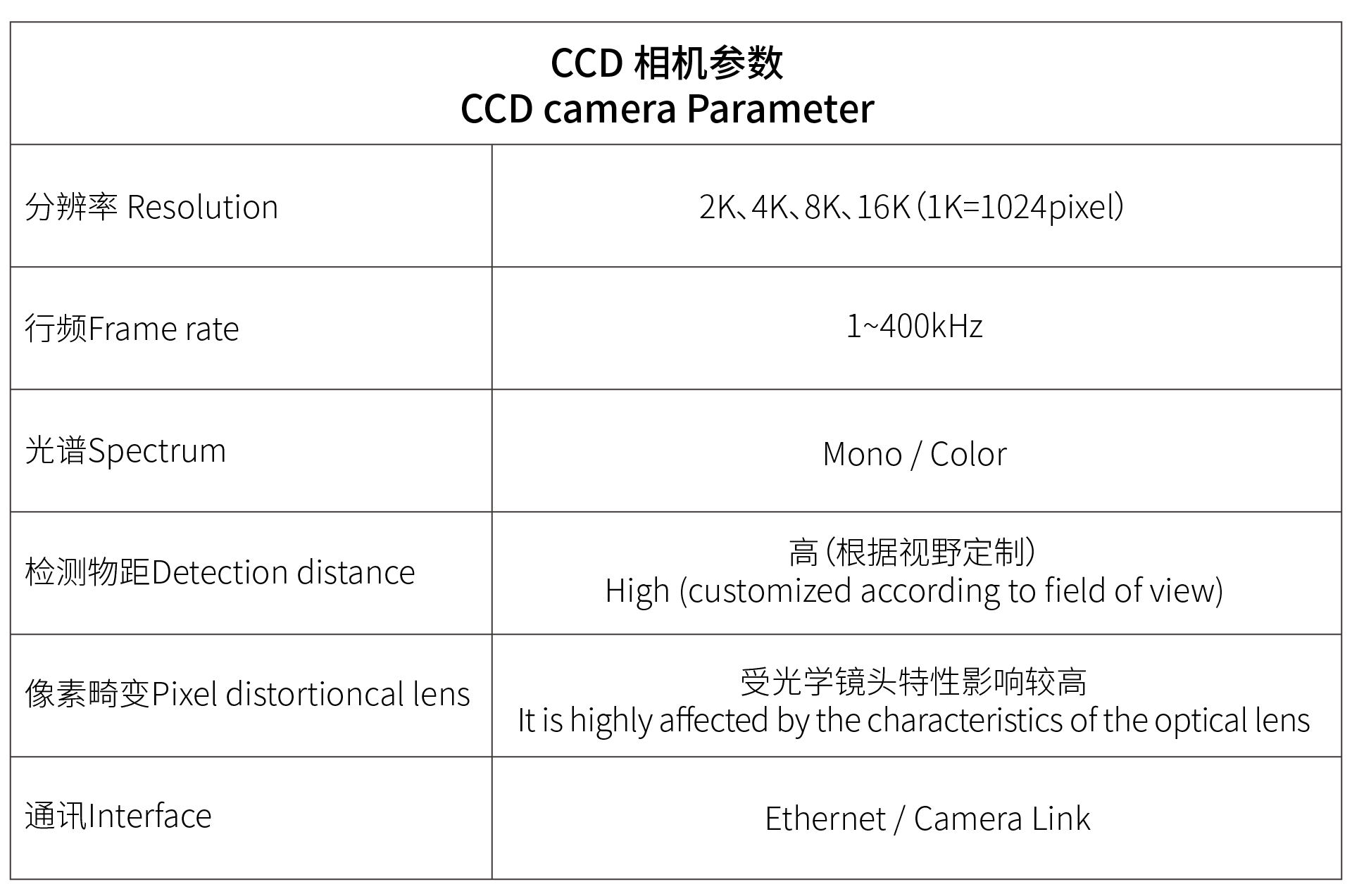
Resolution: Choose a high resolution CCD which is enough to ensure that the details of the object can be captured. The higher the resolution, the clearer the image and the smaller the field of view is, but the corresponding data volume and processing requirements are also requiring higher.
Line rate: Select the appropriate frame rate based on the moving speed of the object being measured and the detection requirements. The higher the frame rate, the more images the camera can capture per second, which is suitable for fast-moving objects.
Lighting conditions: Choose a camera that can work in different lighting conditions. Some cameras have automatic exposure adjustment features for environments with large changes in lighting.
Image color: Select Mono (single channel black and white) or Color (multi-channel color) sensors according to the abnormal point features that need to be detected on the object, so as to more easily distinguish the difference between the object to be tested and the environment or the difference in abnormal points;
Storage and transmission: Consider the camera's storage and transmission methods. Some cameras support local storage, while others support transmitting video data through the network.
Price: Choose the right camera for your budget. Usually there are higher resolutions and frame rates of high-end cameras, but they are also more expensive.
Pixel distortion: Pixel distortion is highly affected by the characteristics of the optical lens. In a dim light condition, choose a camera with high sensitivity to obtain better image quality.(We will publish a separate article of light sources, so please stay tuned)
Demand case: detection range FOV = 400mm, running speed V = 60m/min (i.e. 1000mm/s), measurement accuracy X needs to be within 0.1mm (±0.05mm error range). In order to select a suitable camera, the following key factors need to be considered:
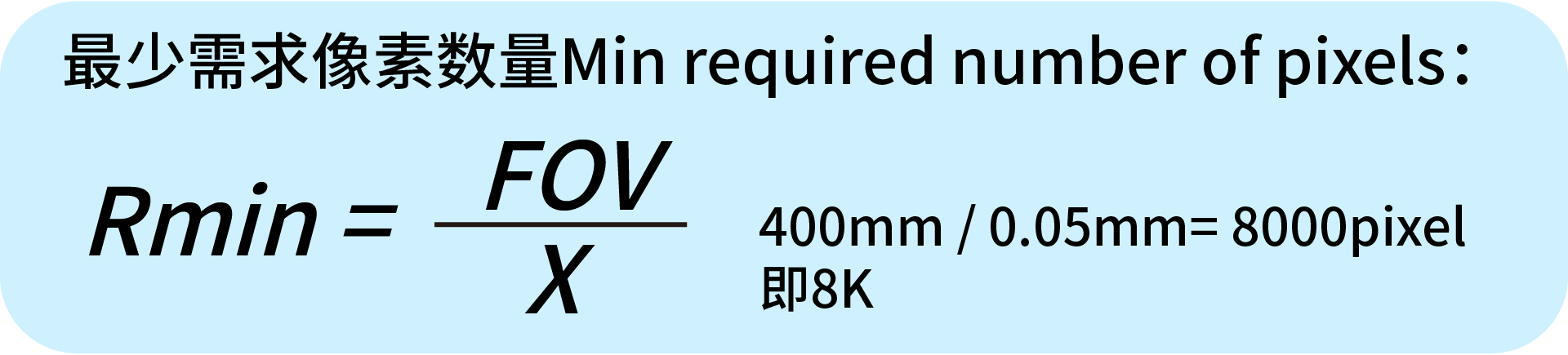
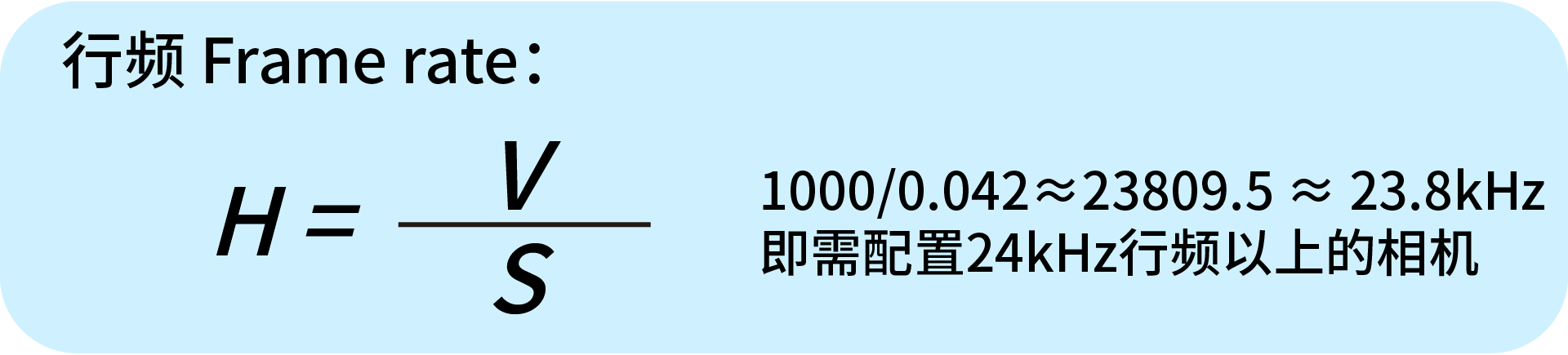
Appearance inspection: minimum inspection size - at least 3 times pixel accuracy, i.e. 0.147mm (±0.074mm) Size inspection: minimum inspection size = 2~10 times pixel accuracy, i.e. 0.098mm ~0.49mm (±0.049mm~±0.254mm)
How to identify image features:

Use a CCD linear array camera to shoot the target object and obtain original image data. The original image data is usually a series of gray values or color values, which represent the brightness or color information of each pixel in the image.
Application fields: Linear scan cameras play an important role in many fields such as industrial quality control, medical diagnosis, scientific research, security monitoring and electronic testing with their high resolution, high-speed data acquisition and continuous processing capabilities, and have become a key tool for efficient and accurate image feature recognition and measurement. In the industrial field, linear scan cameras have become core tools for many key links such as quality inspection, precise dimensional measurement, surface defect identification and automated production process monitoring with their excellent high resolution, high-speed data acquisition capabilities and continuous scanning accuracy. They can capture tiny details on the surface of objects and provide extremely high-definition images, allowing companies to accurately identify more problems in the production process and achieve efficient and accurate production monitoring and quality control. Whether it is the detection of continuous materials such as metal, plastic, paper or fiber, linear scan cameras can perform excellently, ensure the stability and reliability of the product, and provide strong guarantees for the company's production efficiency and product quality.
Advantages and disadvantages of CCD line array cameras:
Advantages:
High resolution: Line scan cameras usually have a high number of pixels per line, such as 1024, 2048, 4096, 8012, etc., which is much higher than the 640, 768, 1280 pixels of general area scan cameras. High resolution enables line scan cameras to capture more detailed information and is suitable for application scenarios that require high image accuracy.
High-speed acquisition: The acquisition speed of line array cameras is generally fast, usually between 5000-80000 lines/second.
Continuous acquisition and processing: Linear scan cameras can continuously acquire images of objects moving in a straight line. This continuous acquisition and processing capability makes linear scan cameras widely used in automated production lines and machine vision systems.
High-precision measurement: The high resolution and high-speed acquisition capabilities of line array cameras enable high-precision measurement, which has significant advantages in applications such as quality inspection and dimensional measurement.
Cost-effectiveness: Although line scan cameras are relatively expensive, in some application scenarios, the benefits brought by their high resolution and high-speed acquisition capabilities are sufficient to outweigh their costs.
Disadvantages:
Long time for image acquisition: Since the line scan camera can only scan and acquire images line by line, the image acquisition time is relatively long. This may limit the use of line scan cameras in some application scenarios that require rapid acquisition of 2D images.
Complex to use: The installation and debugging of line array cameras require professional technicians and are relatively complex to use.
High motion requirements: Line scan cameras rely on the movement of the object or camera to complete image acquisition, so they are not suitable for applications that require static detection.
High requirements for the environment: The light source and ambient lighting conditions of the line array camera have a great impact on the image quality and need to be used in a well-controlled environment.
Relatively high price: Line scan cameras are usually expensive, especially those with high resolution and high-speed acquisition capabilities. This may limit the popularity of line scan cameras in some budget-limited application scenarios.
In summary, line scan cameras have the advantages of high resolution, high-speed acquisition, continuous acquisition and processing, and high-precision measurement, but they also have disadvantages such as long image acquisition time, high system complexity, high requirements for matching scanning speed and line frequency, and relatively high price. When choosing a line scan camera, you need to make comprehensive considerations based on specific application requirements and budget.